The Fixed Field Myth: Why Cricket Positions Move
Cricket fielding positions are clues to a bowler’s plan. Learn how batter orientation, field changes and familiar zones help you read the next delivery.
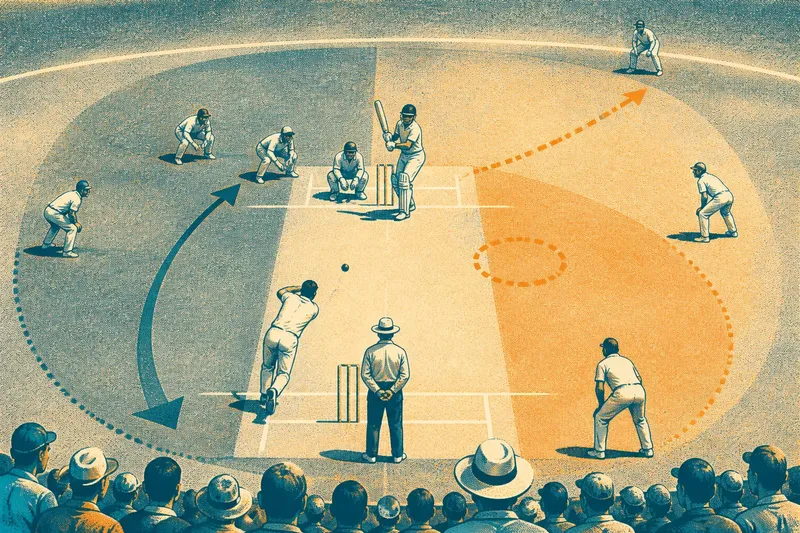
Cricket fielding positions are clues, not fixed jobs: a captain may move a player to guard a gap or support a different bowling plan. To understand those changes, start by locating the batter’s off side and leg side, then notice which areas the field protects.
What do off side and leg side mean?
The off side is the side in front of the batter in their batting stance; the leg side, also called the on side, is behind them. These terms are relative to the striker, not to the bowler or a permanent compass direction. When a left-handed batter takes strike, the sides reverse compared with a right-handed batter.
Position names describe areas around the pitch from the striker’s point of view. Slip is close to the wicket on the off side, while fine leg is behind the batter on the leg side. A fielder’s exact spot can vary, and broadcasters may use labels such as deep cover or square leg to describe a more specific area.
Before interpreting a change, identify the striker and where they are facing. A batter may change ends during an over, and a new batter may have a different handedness. Either can make the same patch of grass acquire a different position name.
Why does a captain move a fielder?
A field supports a bowling plan. The captain and bowler may want to protect a likely scoring area, leave a tempting gap, or place a catcher where an edge or mistimed shot could travel. The arrangement responds to the batter, the intended delivery and the match situation.
Imagine a right-handed batter has repeatedly driven balls through the off-side cover area. Before the next delivery, the captain moves a fielder from inside the ring to the cover boundary. The observable tradeoff is clear: a clean drive may be harder to turn into a boundary, while the space the fielder left inside the ring may offer a quicker scoring chance.
A move does not tell you exactly what the bowler will deliver. It signals an intended contest; the ball may follow the plan, miss its target or prompt the batter to choose another shot. Read the field as a clue, then compare it with the delivery.
What should you check when a field shifts?
- Check the striker’s handedness. If a new batter is left-handed, then reinterpret off-side and leg-side positions from that batter’s stance; otherwise, keep the previous orientation.
- Check whether the batters changed ends. If the next striker is different, then reset your view around that player; otherwise, compare the field with the same striker’s previous deliveries.
- Check which area gained a fielder. If a player has moved toward a likely scoring zone, then watch whether the bowler targets that area; otherwise, look for a change in depth or angle rather than assuming the plan is unchanged.
- Check what space the move leaves open. If a gap has appeared, then notice whether the batter tries to use it; otherwise, consider whether the extra protection has closed a previous scoring route.
- Check whether the captain moved one player or several. If several positions changed, then look for a broader adjustment to the plan; otherwise, consider whether one fielder is simply refining their position.
- Check whether the delivery matches the arrangement. If it does, then follow how the batter responds to the protected area; otherwise, treat the field as an intention that the bowler did not execute on that ball.
How can you read field positions from the stands?
Start with three observations: the striker’s handedness, the fielders close to the bat, and the areas guarded near the boundary. You do not need to name every position. A simple note such as “right-hander, close catcher on the off side, deep cover” gives you a useful snapshot to compare after the delivery.
Close catchers and boundary riders suggest different kinds of attention, but neither predicts the outcome. A catcher beside the wicket may be ready for an edge or a mis-hit; a deep fielder may cover a likely boundary route. The arrangement can also serve another purpose, so wait for the delivery before settling on an interpretation.
Say you are watching a right-handed batter, with a close catcher on the off side and a fielder near the cover boundary. The bowler delivers outside off stump, and the batter leaves the ball. Your starting note, the delivery and the batter’s choice together suggest the field may be supporting pressure outside the batter’s reach; the next ball could confirm or complicate that reading.
What questions help explain a moving field?
Does the bowler choose every fielding position?
The captain usually sets the field, often with input from the bowler. The bowler’s intended line, length and variation help shape the arrangement, while the captain weighs the batter and match situation.
Why put a fielder on the boundary?
A boundary fielder can stop a powerful shot reaching the rope or make the batter consider a different route. That placement may leave another area less protected, creating a tradeoff for the fielding side.
Why can a fielder move between deliveries?
The captain may respond to a scoring shot, a change in strike or a revised bowling plan. A player may also adjust their angle or depth without changing their broad role.
Can the captain place fielders anywhere?
No. The match’s format and playing conditions can restrict field placements, including the number of fielders allowed in particular areas. The applicable rules determine the limits.
How should you interpret the next ball?
Compare the new field with the bowler’s delivery and the batter’s response. If the arrangement protects one route, notice whether the bowler uses a line that makes that protection relevant. If the batter chooses a different shot, the field may reveal which alternative the captain has left open.
When you see cricket fielding positions move, identify the striker, note the area gained and the space left behind, then watch what the next delivery makes possible. That small routine turns unfamiliar labels into a readable picture of the contest without treating any one fielder’s position as a prediction.