Why an Over Has Six Legal Deliveries
Why an over has six legal deliveries: learn how wides and no-balls affect the count, when an over ends, and what the rule reveals about match flow.
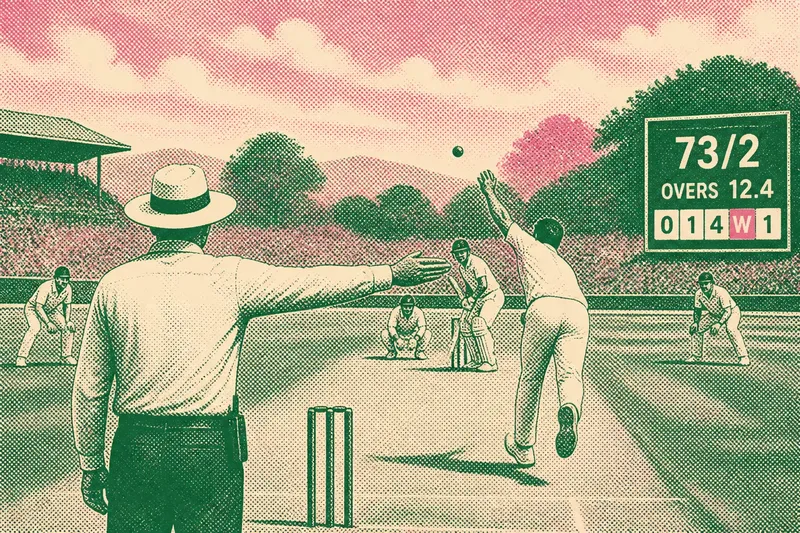
Why an over has six legal deliveries becomes clear when a bowler sends down an apparent sixth ball and the umpire calls “wide.” The over counts valid deliveries, not every ball that leaves the bowler’s hand, so the bowler may need to continue.
What does an over count?
Keep the legal-ball count separate from the total number of deliveries. A legal ball counts toward the over; a wide or no-ball ordinarily does not. Runs can still be scored, and play can continue, but those events do not by themselves turn an illegal delivery into a legal one.
That is why an over can involve more than six actual deliveries. The count tracks the valid balls in the over, while the score records what happened on each delivery.
Why don’t wides and no-balls count?
A wide is called when the ball is judged too far from the batter to be reasonably playable, taking the batter’s position and movement into account. A no-ball can be called for several reasons, including certain faults in the bowler’s delivery or position. In either case, the batting side receives an extra under the applicable rules, and the delivery ordinarily does not use up one of the over’s six legal balls.
A wide or no-ball can still bring other runs or a boundary, and the rules may allow certain dismissals. “Doesn’t count” here refers to the over tally, not to whether the delivery affects the score or the action.
How can you follow the count at the ground?
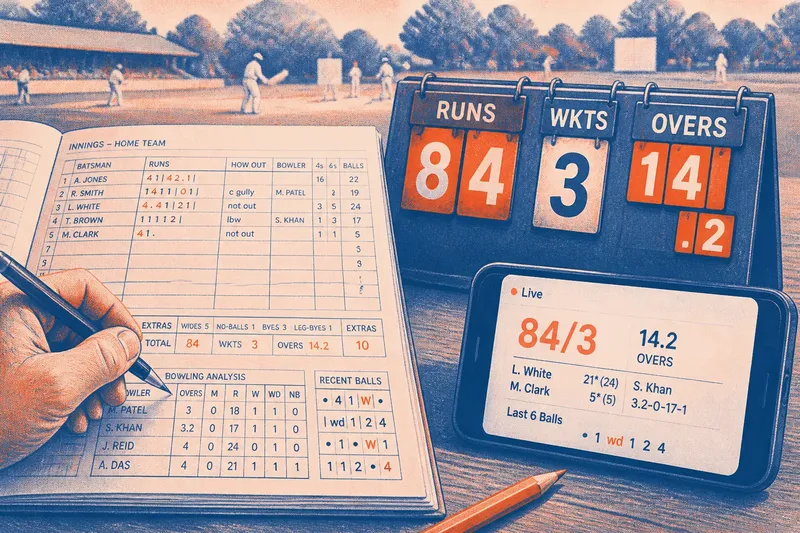
Watch the umpire’s signal alongside the scoreboard. A wide is signaled with an arm extended horizontally; a no-ball with one arm held out to the side. Score graphics commonly show completed overs and the legal balls bowled in the current over. A display ending in “.4” means four legal balls have counted in that over, not necessarily that only four deliveries were bowled.
- If the umpire calls wide, expect another delivery for the over; if the ball was not called wide, count it if it is otherwise legal.
- If the umpire calls no-ball, leave the legal-ball count unchanged; if no no-ball is called, assess the delivery under the usual count.
- If a legal delivery has been bowled, add one to the over count; if a ruling changes its status, follow that ruling instead.
- If the score ends the current over at “.5,” expect one more legal delivery; if it shows “.6” or a completed-over notation, check the display convention because graphics vary.
- If the graphic and the umpire’s call seem out of step, wait for the scorer’s update; if they remain unclear, use the umpire’s decision to understand the immediate count.
- If an apparent sixth delivery is called wide or no-ball, expect the bowler to continue; if it is ruled legal, the over can be complete.
What happens when a delivery is unusual?
A batter can miss a legal delivery, and a ball can pass without being hit. If the umpire does not call wide or no-ball and no other ruling affects the count, it still counts. A batter can also hit a wide or no-ball into play without making it a legal delivery.
A dead-ball call needs more care. Not every dead-ball ruling means the delivery is excluded from the over: whether it counts depends on the circumstances and the applicable laws or playing conditions. Listen for the umpire’s decision and use the scorer’s count rather than assuming that every ball declared dead has the same effect.
Why does the over change the shape of play?
An over is also a handoff. Under the standard arrangement, one bowler delivers the over and another takes the next one from the opposite end. The pause gives the fielding side a chance to adjust, and the next bowler may present a different angle or challenge for the batter.
Say you are following a close chase and the bowler’s apparent sixth delivery is called wide. The score records the extra, but the legal-ball count stays at five. The bowler sends another delivery, and the umpire rules it legal; that completes the over. The next bowler then comes on from the opposite end, giving you a clear moment to notice any change in the matchup.
What else might you want to know about an over?
Does a boundary on a wide count as a legal delivery?
No. The boundary can add runs, but the wide remains an illegal delivery for the over count. Another legal delivery is still needed.
Can a batter be out from a no-ball?
Some dismissals remain possible, while others are ruled out by a no-ball. The precise options depend on the laws and playing conditions, but the no-ball ordinarily does not count toward the over.
Do all cricket formats use the same over count?
The standard over in cricket consists of six legal balls. A competition’s playing conditions can set specific provisions, so check the match rules if an exception appears to apply.
Does an over always end after six deliveries?
An over normally ends after six legal deliveries, which may take more than six attempts if wides or no-balls occur. Special circumstances can interrupt an over or affect what happens next, with the applicable rules determining the procedure.
What should you watch in the next over?
Use the count to track how close the bowler is to finishing and notice whether an extra has kept the current batter facing. When you understand why an over has six legal deliveries, a wide is more than a run on the board: it also leaves a legal ball to be bowled and may delay the change of bowler.