Your First Test Match: Follow the Session, Not Every Ball
Follow a Test match session by reading its changing pressure, tactics, and turning points, so you can understand the day’s story without tracking every ball.

To follow a Test match session, watch how pressure shifts between the batters and bowlers. A quiet passage can turn when a new batter arrives, a captain changes the field, or the batting pair starts finding gaps.
Instead of trying to remember every delivery, notice how the session’s conditions shape each side’s choices. The most revealing moments often come when a plan stops working and someone adjusts.
Why can a session change direction?
A session is a useful stretch of play to interpret because its conditions can change while the teams stay on the field. The batting side might begin cautiously, then look for runs once the bowlers lose control. The bowling side might switch tactics after a wicket or a partnership begins to settle.
Think of a session as a contest over options. Batters decide which deliveries to defend, leave, or attack. Bowlers and captains respond with changes in pace, line, or field placement. You do not need to know the private plan: watch for what changes on the field and how the batters respond.
Which signs reveal pressure?
Read the score in context, then connect it to visible decisions. A score alone cannot tell you whether the batting side feels secure; the remaining wickets, the current pair, and the bowlers’ approach add useful clues.
- New batter at the crease: If the field closes in or the bowler attacks the edge, expect the bowling side to test the newcomer; if the field stays spread, watch for a plan to limit scoring instead.
- Batters defending or leaving more often: If they repeatedly decline scoring chances, expect a period of caution; if they begin choosing gaps, look for the bowling side to adjust its line or field.
- Bowler or pace changes: If a captain brings on a different type of bowler, watch how the batters respond; if the new approach brings no visible pressure, the captain may switch again.
- Fielders move closer or deeper: If close catchers appear, look for attacking deliveries; if fielders retreat, watch whether the bowlers are trying to contain boundaries or invite a riskier shot.
- A partnership starts to settle: If the pair rotates the strike and scores with less apparent risk, expect the bowlers to search for a new angle; if one batter struggles, watch whether the attack concentrates on that matchup.
- The session nears a break: If batters become more protective, they may be trying to reach the interval without losing a wicket; if bowlers keep attacking, watch for an attempt to create one last chance.
Each sign is a clue, not a verdict. A deep fielder can protect a boundary or respond to a batter’s preferred scoring area. Compare the field with the bowler’s line and the batter’s choices before deciding what the change might mean.
Imagine you tune in after a break with a new batter facing a bowler who is repeatedly moving the ball past the outside edge. The field has close catchers, and the pair is defending rather than taking risks. You can describe the immediate contest as a test of whether the new batter settles. If the pair begins scoring through gaps and the field spreads, the pressure has eased and the session’s story has shifted.
How do conditions affect the contest?
Pitch, weather, light, and the ball’s condition can affect what players attempt. You can follow the consequences without diagnosing the surface: notice whether the ball passes the bat, whether batters leave more deliveries, and whether the field changes after a spell of pressure.
Commentary can connect those observations to cricket terms. A spell is a period of bowling by one bowler; a partnership is the time two batters spend batting together. If a commentator mentions movement or bounce, compare the description with the ball’s path and the batter’s response.
A wicket also changes the available matchups. The new batter may need time to settle, while the bowling side can keep attacking or try to restrict runs. Watch the next field setting and the batter’s choices to see which approach takes shape.
What do viewers ask about Test sessions?
Why can a quiet session still matter?
Batters may be resisting difficult bowling while bowlers build pressure without taking a wicket. A lack of dramatic events does not mean the contest is standing still.
Why does a wicket change the mood?
A wicket ends one batter’s innings and brings a new player into the matchup. The bowling side may attack the newcomer, while the batting side may focus on settling the new pair.
What does a partnership tell me?
It shows how two batters are managing the innings together, from protecting their wickets to looking for scoring chances. Their choices help explain the score’s movement.
Do I need to know every fielding position?
No. Start by noticing whether fielders are close to the batter or farther away, and whether their positions change. Commentary can name a specific position if it matters to the moment.
How can you interpret the interval?
At the break, describe what changed rather than trying to predict the result. Perhaps the batting side steadied the innings, the bowlers created repeated chances, or a new batter altered the pace. That short account gives the next session context without turning the match into a puzzle.
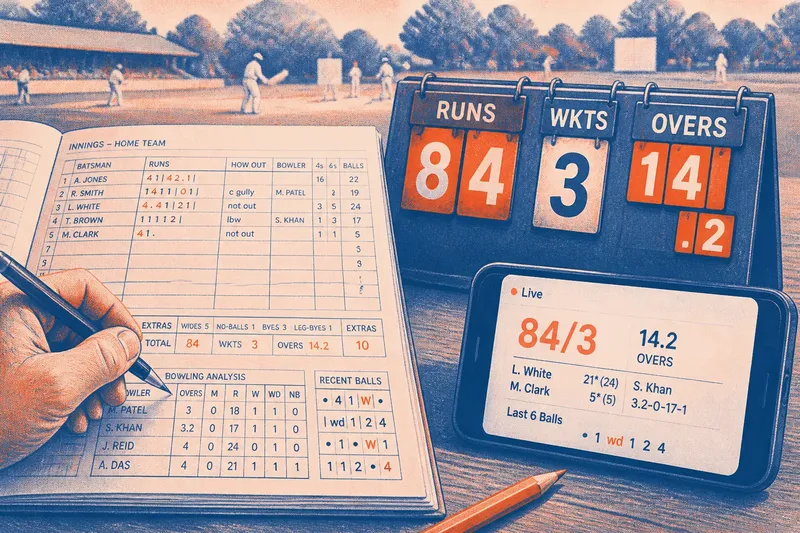
If you miss part of the play, check the current score, wickets, batters, and bowler, then look at the field and the next few decisions. A scorecard supplies the match state; television shows field placements, radio commentary describes the action, and a live scorecard can help you catch up after a distraction.
For your first Test match, follow how the pressure changes from one interval to the next. The score tells you what happened; the session reveals how the players responded and what choices remain. That distinction makes even a slow passage easier to read.